
Chef / Pastry Chef
The hours are real and you need to go in clear-eyed about them. Early starts, late finishes, split shifts, and working every weekend and bank holiday are standard in restaurant kitchens, particularly at the start of a career. This does not mean it is not worth it, but knowing what you are committing to matters.
What is it?
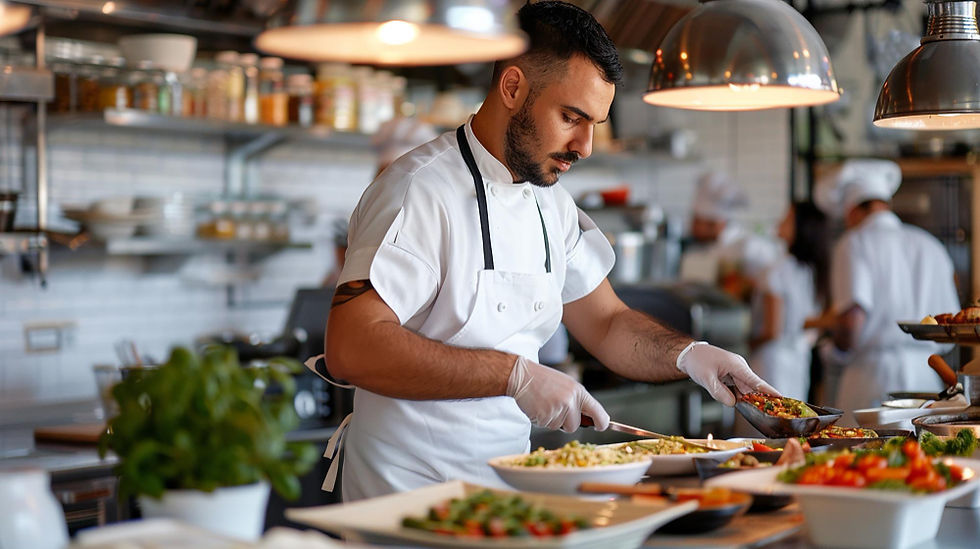
A Chef is a skilled culinary professional who prepares, cooks, and presents food in a professional kitchen. A Pastry Chef - sometimes called a Pâtissier - specialises in the preparation of pastries, desserts, breads, and baked goods. Both roles sit within one of the most demanding, creative, and globally universal trades in existence.
Chefs work in an enormous range of environments - from school canteens and hospital kitchens to Michelin-starred restaurants, private yachts, film sets, and five-star hotels. The skills are transferable almost anywhere in the world, the demand is constant, and the career paths are as varied as the cuisines themselves.
It is also a trade that asks a great deal of you. The hours are long, the pace is relentless, the physical demands are significant, and the pressure during service can be intense. Those who thrive in professional kitchens tend to genuinely love food, work well under pressure, and find the rhythm of a busy service energising rather than exhausting.

What would you actually do?
Depending on your role, level, and kitchen, you could be:
Preparing ingredients - chopping, portioning, marinating, and mise en place
Cooking dishes to order during service using a range of techniques and equipment
Creating and developing recipes and seasonal menus
Managing a section of the kitchen - grill, sauce, larder, pastry, or garnish
Baking and producing breads, pastries, cakes, and desserts
Decorating and finishing dishes and patisserie to a high visual standard
Monitoring food quality, consistency, and presentation throughout service
Managing stock, ordering ingredients, and minimising waste
Ensuring food safety and hygiene standards are maintained at all times
Training and supervising junior kitchen staff
Running a kitchen section or entire operation as you progress
Pastry is a genuinely distinct skill set. Cooking is largely intuitive and forgiving, you can adjust a sauce on the fly. Pastry and baking are more scientific and precise. Measurements, temperatures, and timings matter in ways they do not always in savoury cooking. People who suit pastry tend to enjoy that precision.
Career Paths
Commis Chef - the starting point for most professional chefs. An entry-level role learning the basics of kitchen operation, preparation, and cooking across different sections.
Chef de Partie - a section chef responsible for a specific area of the kitchen such as the grill, fish, sauce, or larder. The backbone of most professional kitchen brigades.
Sous Chef - the second in command, supporting the Head Chef in running the kitchen, managing the team, and maintaining standards.
Head Chef / Executive Chef - responsible for the entire kitchen operation -- menus, staffing, costs, suppliers, and quality. A leadership role as much as a cooking one.
Pastry Chef (Pâtissier) - specialising in desserts, patisserie, breads, and baked goods. Works across restaurants, hotels, bakeries, patisseries, and standalone pastry operations.
Bakery and artisan bread - focusing on sourdough, fermentation, and traditional baking techniques. A distinct and growing specialism with its own dedicated following.
Private Chef - cooking for private households, high-net-worth individuals, or on private yachts and jets. Offers variety, high pay, and significant independence.
Catering Chef - working in large-scale catering for events, venues, schools, hospitals, prisons, and corporate settings. Less glamorous than restaurant work but often more sociable hours and better work-life balance.
Development Chef - working for food manufacturers, supermarkets, or restaurant groups to create and test new recipes and products. Combines culinary skill with food science and commercial thinking.
Supper club and pop-up - an increasingly popular route for entrepreneurial chefs to build a following and test a concept before committing to a permanent venue.

Is it right for you?
You might suit a career as a Chef if you:
Are genuinely passionate about food - ingredients, flavour, technique, and cuisine
Work well under pressure and find a busy service energising rather than overwhelming
Are physically robust and comfortable being on your feet for long shifts
Have a creative eye for presentation alongside a disciplined approach to consistency
Enjoy being part of a close-knit, high-performing team
Are ambitious and prepared to invest years of hard work building your skills and reputation
It might not suit you if evenings, weekends, and split shifts are genuinely incompatible with your life. The hospitality industry asks a great deal in terms of unsociable hours, particularly at the start of a career.
The skills are globally portable. A qualified chef with solid technique and professional kitchen experience can find work almost anywhere in the world. Australia, New Zealand, Canada, the Middle East, and Europe all have strong hospitality industries with demand for skilled kitchen staff.
Skills you will build
Knife skills and preparation techniques - the foundation of all professional cookery
Classical and modern cooking techniques - sautéing, braising, roasting, poaching, grilling, and more
Sauce making, stock production, and understanding flavour development
Pastry and baking techniques - shortcrust, puff, choux, bread doughs, and patisserie
Plating and presentation - making food look as good as it tastes
Kitchen organisation and mise en place - having everything in place before service begins
Food safety and hygiene - a legal requirement and a professional standard
Menu costing and portion control - understanding the commercial side of kitchen management
Stock management and supplier relationships
Team communication and leadership as you progress
How do you get in?
Apprenticeship - a Commis Chef apprenticeship at Level 2 is a well-regarded and practical route, combining kitchen work with college attendance. Takes around eighteen months to two years. A good way to earn while developing real kitchen skills from the start.
College course - a Level 1, 2, or 3 Diploma in Professional Cookery or Professional Patisserie and Confectionery is the most common college-based route. Provides a solid technical foundation and is widely respected by employers.
Culinary school - private culinary schools such as Le Cordon Bleu, Westminster Kingsway College, and University College Birmingham offer prestigious programmes in professional cookery and patisserie. Fees are significantly higher than standard college but the reputation and network these schools provide can open doors at the highest levels of the industry.
Straight into a kitchen - many chefs begin as kitchen porters, kitchen assistants, or waiting staff and work their way into cooking roles by demonstrating enthusiasm, reliability, and a willingness to learn. Starting at the bottom and working your way up is a well-trodden and respected path in hospitality.
Stages - working unpaid or for minimal pay in a professional kitchen to learn from experienced chefs. Common in fine dining and Michelin-starred kitchens. Demanding but enormously educational for those with serious culinary ambitions.
Food allergies are a life-and-death matter in a professional kitchen. Since Natasha's Law, food businesses are legally required to provide full allergen information. Understanding allergens, preventing cross-contamination, and communicating clearly with front-of-house staff about dietary requirements is a non-negotiable professional responsibility.

Qualifications to know about
Level 1 Award in Introduction to Cookery - a short introductory qualification for those exploring the trade before committing to a full course
Level 2 Diploma in Professional Cookery - the core entry qualification covering a broad range of cooking techniques, kitchen skills, and food safety
Level 3 Diploma in Professional Cookery - for those progressing to more complex techniques, menu development, and supervisory responsibilities
Level 2 / 3 Diploma in Professional Patisserie and Confectionery - the specialist qualification for pastry chefs, covering pastry, desserts, chocolate, sugar work, and bread
City & Guilds and WSET - City & Guilds is the main awarding body for professional cookery qualifications; WSET (Wine and Spirit Education Trust) qualifications are valuable for those moving into front-of-house management or pairing menus
Food Safety in Catering (Level 2) - the minimum food hygiene qualification required for anyone working in a professional kitchen; a legal requirement
Food Safety Management (Level 3 / 4) - for supervisors and managers responsible for food safety systems
HACCP training - understanding and implementing Hazard Analysis and Critical Control Points, the food safety management system used in professional kitchens
Allergen awareness training - a legal requirement since Natasha's Law came into force; every kitchen worker must understand allergen risks and controls
What can you earn?
Kitchen porter / apprentice: Around £7,000 - £14,000 per year
Commis Chef: Around £18,000 - £22,000 per year
Chef de Partie: Around £22,000 - £30,000 per year
Sous Chef: Around £28,000 - £38,000 per year
Head Chef: Around £35,000 - £55,000 per year
Executive Chef / private chef: £55,000 - £100,000+ per year
Earnings in the chef profession vary enormously by setting. A school dinner chef and a private chef for a billionaire both work in professional kitchens, but their pay, hours, and lifestyle are completely different. London and major cities pay more than rural areas. Fine dining and private work pay significantly more than high street restaurants. Tips and service charges add meaningfully to income in many settings.
Pastry Chefs at senior level - particularly in hotels, fine dining, and chocolate and patisserie - are in genuinely short supply and can command strong salaries as a result.
What could it lead to?
Head Chef or Executive Chef running your own kitchen and team
Pastry Chef or Head Pâtissier in a hotel, restaurant, or standalone patisserie
Private Chef cooking for high-net-worth individuals, families, or on yachts and jets
Development Chef creating recipes for food brands, supermarkets, or restaurant groups
Food writer, stylist, or broadcaster - combining culinary expertise with communication
Culinary educator teaching professional cookery at college or culinary school
Restaurant owner or food business entrepreneur
Supper club, pop-up, or catering business founder
Chocolate maker or artisan food producer
Competition chef representing the UK on the international stage
The hours are real and you need to go in clear-eyed about them. Early starts, late finishes, split shifts, and working every weekend and bank holiday are standard in restaurant kitchens, particularly at the start of a career. This does not mean it is not worth it, but knowing what you are committing to matters.